Heating-System Tune-Up Checklist
Heating systems fail on the coldest night of the year — that's not bad luck, it's neglect meeting peak load. Run through this checklist in early fall, while technicians still have open appointments and parts are easy to get.
Safety first. If you smell gas (rotten-egg odor), leave the house
immediately and call your gas utility or emergency services from outside — don't
flip switches or light anything. For any electrical work, turn off the breaker first.
Anything involving gas lines, gas valves, or internal electrical components belongs
to a licensed technician, not a weekend project.
Every system: the basics
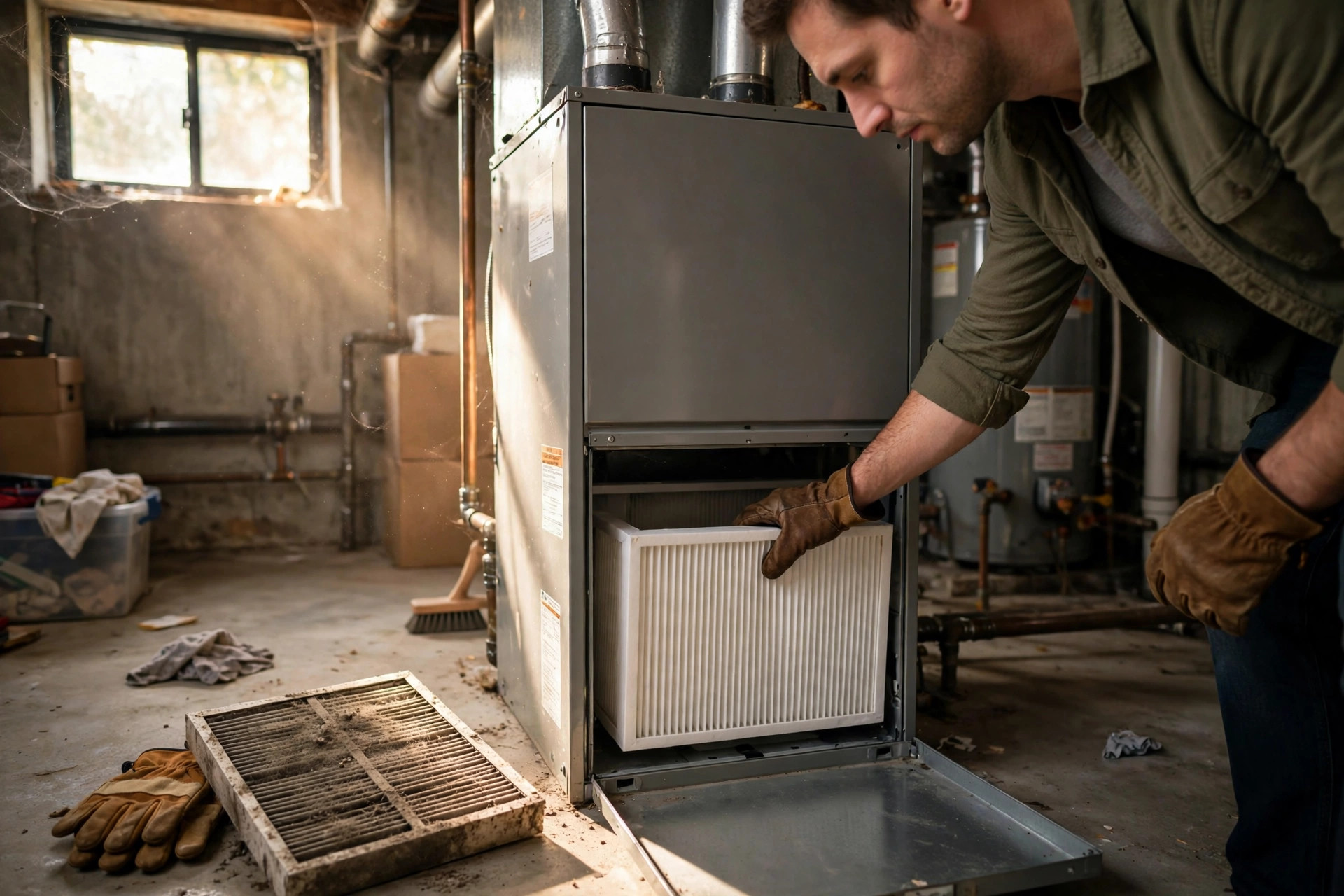
- Change or clean the filter. A clogged filter chokes airflow, making any forced-air system work harder and heat unevenly. Check monthly during heating season; most homes need a new filter every 1–3 months depending on pets, dust, and filter type.
- Clear vents and returns. Walk the house and make sure supply vents aren't blocked by furniture, rugs, or curtains, and return-air grilles are uncovered. A blocked return starves the whole system.
- Test the thermostat. Switch to heat, set it a few degrees above room temperature, and confirm the system kicks on and warm air (or hot radiators) follows. Do this before the first cold snap, not during it.
- Test smoke and carbon monoxide detectors. Press the test button on every unit, replace batteries, and replace any detector past its expiry date (usually printed on the back — most last 7–10 years). You want one CO detector on each floor, especially near bedrooms.
- Look and listen. With the system running, listen for new banging, screeching, or rattling, and look for soot marks, rust, or water pooling around the unit. New noises and stains are the system's way of asking for help.
Forced-air furnace
- Check the flame. If your furnace has a sight glass, the burner flame should be steady and blue. A yellow, flickering, or lazy flame can indicate a combustion problem — shut it down and call a technician.
- Clear the condensate drain. High-efficiency furnaces produce acidic condensate that drains through a small tube. If it's clogged, the furnace may shut itself off. Make sure the tube is clear and draining freely.
- Keep vents outside clear. The intake and exhaust pipes (usually white PVC on high-efficiency units) must be free of leaves, snow, and nests. Blocked vents are a carbon monoxide risk.
- Oil the blower if it has ports. Some older blower motors have small oil ports — a few drops of motor oil per the manual keeps them quiet. Many newer motors are sealed and need nothing.
Boiler (hot water or steam)
- Check the pressure gauge. Hot-water boilers typically run around 12–15 psi when cold. If it's far off, or drops repeatedly, call a technician — don't keep topping it up blindly.
- Bleed the radiators. If upstairs radiators are cold at the top, trapped air is the likely cause. Open the bleed valve with a radiator key until water (not air) comes out, catching drips with a cloth.
- Steam systems: check the sight glass — water should sit around the halfway mark. Listen for banging pipes (water hammer), which a technician should investigate.
Heat pump
- Clear the outdoor unit. Remove leaves, trim back plants to give it breathing room, and keep snow and ice from piling against it all winter.
- Clean or replace filters just like a furnace — many heat pumps use the same indoor air handler.
- Expect defrost cycles. In cold weather the outdoor unit periodically reverses to melt frost — steam and a whooshing sound are normal. Ice that never clears, though, is a service call.
- Don't crank it. Raising the thermostat several degrees at once can trigger expensive backup heat. Nudge it up gradually instead.
When to call a licensed technician
- Anything involving gas piping, gas valves, or the gas burner assembly.
- Any electrical work inside the unit beyond changing a filter or thermostat batteries.
- Yellow or irregular burner flame, soot around the unit, or a CO alarm going off.
- Short cycling (system turning on and off rapidly) or failure to reach the set temperature.
- Water pooling where it shouldn't be, or boiler pressure that won't stay in range.
- It's simply been more than a year since a professional serviced the system. Annual service catches worn parts before they fail in January.
Before the tech arrives, jot down the unit's make, model, and serial number (on the rating plate) plus a note of the symptoms and when they started. It saves diagnostic time — and diagnostic time is billable time.