Sealing Drafts: Doors & Windows
Drafts are the most annoying kind of heat loss — you feel every one of them. The good news: doors and windows are also the easiest leaks to fix. Most of these jobs take an afternoon, need only basic tools, and cost less than a tank of gas.
Start by finding the drafts
Do the walk-through from our heat-loss guide first — hand test on a windy day, incense test around frames. Mark every leak with painter's tape. You'll fix the taped spots in order of worst to mildest.
Doors: weatherstripping and sweeps
Doors leak at the edges, not through the middle. Here's what to use where:
- V-strip (tension seal): springy folded strips that press against the door when it closes. Durable, nearly invisible, and the best choice for the sides and top of the frame.
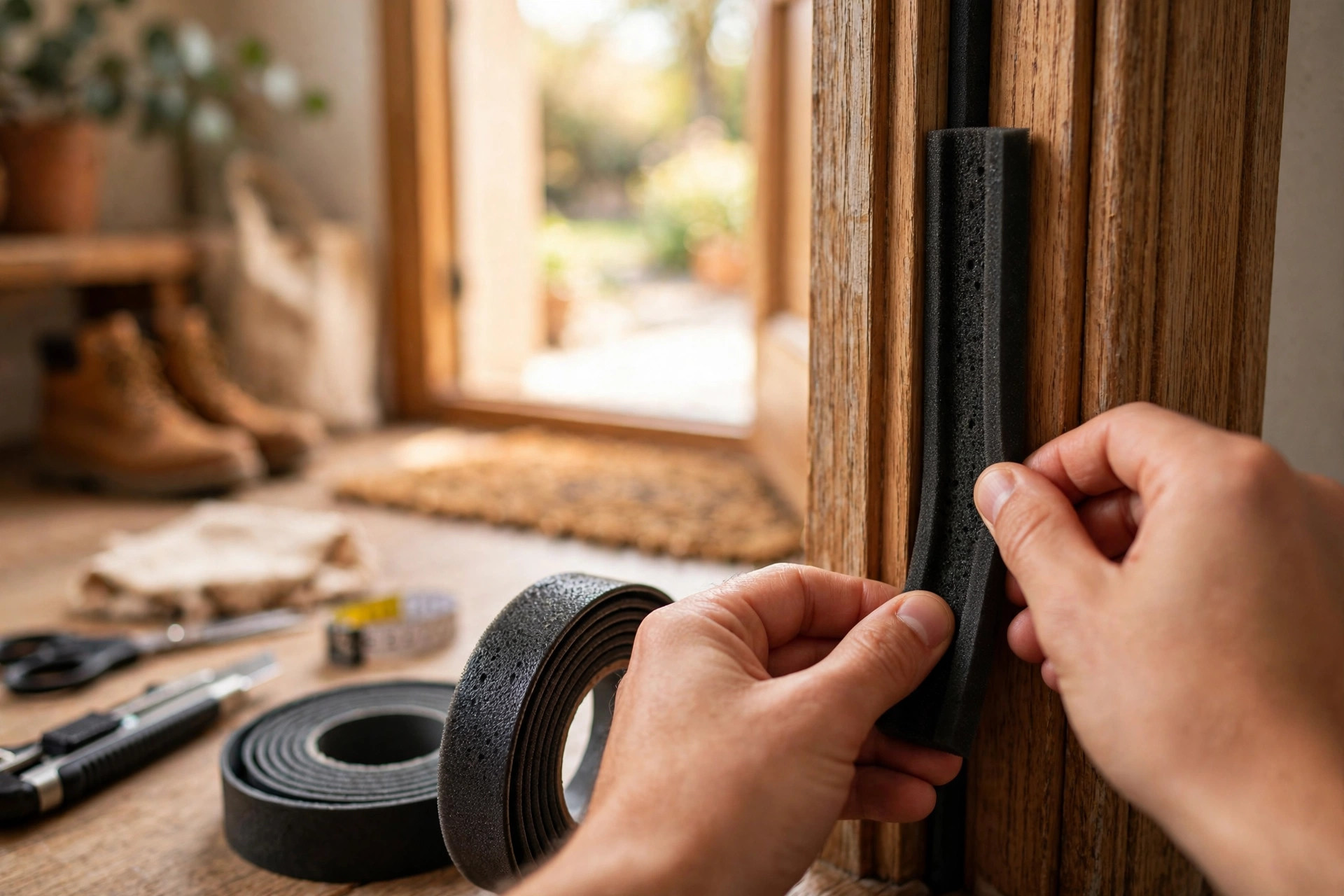
- Foam tape: self-adhesive and dead simple to install — press it into the frame where the door meets it. It compresses over a season or two, so treat it as a consumable and replace as needed.
- Door sweep: a strip that mounts to the bottom of the door and brushes the threshold. If you can see daylight under a closed door, you need one of these.
- Threshold adjustment: many thresholds have screws that raise or lower them. A quarter-turn can close a gap the sweep can't reach.
After installing, close the door on a dollar bill at several points around the frame. If the bill slides out easily, that spot still needs work. If it holds firm, the seal is good.
Windows: caulk, film, and latches
- Caulk the outside: where the window frame meets the siding or brick, old cracked caulk lets water and air in. Scrape out the failed caulk and run a fresh bead of exterior-grade caulk on a dry day above freezing. Never caulk a window shut — caulk belongs on the frame-to-wall joint, not between moving parts.
- Shrink-film kits: clear plastic film taped over the whole window and shrunk tight with a hair dryer. It looks nearly invisible and adds a still-air layer that noticeably cuts drafts on old windows. A solid one-season fix.
- Rope caulk: putty-like cord you press into gaps around window sashes for the winter, then peel off in spring. Great for windows you don't open in winter.
- Latch them: a window that's closed but not latched can leak as much as one left cracked. Walk the house and latch every window fully — free, and surprisingly effective.
The cheapest fixes of all
- Draft stoppers ("door snakes"): fabric tubes laid against the bottom of interior or exterior doors. Ugly? A little. Effective against a whistling gap under the basement door? Very.
- Outlet gaskets: thin foam gaskets that fit behind outlet and switch covers on exterior walls. A whole-house pack costs little and takes an hour to install (turn off the breaker for each outlet first).
- Heavy curtains: floor-length curtains closed at night add an insulating layer over windows. Open them on sunny days to let free solar heat in.
A weekend game plan
Saturday morning: draft hunt with the incense test; buy V-strip, foam tape, a door sweep, and exterior caulk. Saturday afternoon: weatherstrip the two worst doors. Sunday: caulk the worst window frames outside, film the draftiest windows, gasket the outlets. By Sunday night the house will feel different — fewer cold spots, fewer mysterious breezes, and a heating system that cycles a little less often.