Where Your Home Loses Heat
Before you spend a dollar on fixes, spend an hour finding the leaks. Heat escapes through a small number of predictable weak spots, and every home has its own worst offenders. Fix the big ones first and the rest of your winter-prep work gets easier — and cheaper.
The usual suspects
1. The attic hatch and attic floor
Warm air rises, so the ceiling is where your house bleeds the most heat. Two things commonly go wrong up there: the attic hatch or pull-down stairs leak air around their edges, and the insulation on the attic floor is thin, patchy, or has been pushed aside. On a cold day, an attic that feels almost as warm as the living room below is a red flag — it means heat is sailing straight through.
2. Windows and exterior doors
Windows are the thinnest part of your walls, and older single-pane windows are dramatically worse than modern double-pane ones. But even good windows leak if the caulk around the frame is cracked or the window doesn't latch tightly. Doors leak mostly at the edges — worn weatherstripping and a missing door sweep are the classics.
3. The rim joist in the basement
The rim joist is the wooden band where your house's floor framing sits on the foundation wall. It's often uninsulated and full of small gaps where wiring and pipes pass through. Basements feel cold partly because this strip leaks air all winter. It's out of sight, so it rarely gets fixed — which is exactly why it's worth checking.
4. Ductwork in unconditioned spaces
If you have forced-air heat, your ducts may run through the attic, crawlspace, or garage. Ducts with separated joints or missing insulation dump heated air where nobody lives. Feel along accessible duct runs on a cold day: a blast of warm air from a joint means that joint is feeding your attic, not your living room.
5. The fireplace and exhaust vents
An open fireplace damper is a chimney-sized hole in your heating plan — close the damper when the fireplace isn't in use. Bath fans, range hoods, and dryer vents all need dampers or flaps that close when they're off; a flap stuck open is a permanent draft.
6. Outlets and penetrations on exterior walls
Every electrical outlet, light switch, cable entry, and pipe penetration in an exterior wall is a small air leak. Individually they're tiny; added together across a whole house, they're not. Foam gaskets behind outlet covers are a cheap fix for these.
How to find your home's leaks yourself
Walk the house on a cold, windy day. This is the single best free diagnostic. Move slowly along exterior walls, windows, and doors with the back of your hand — it's more sensitive to moving air than your palm. Note every spot where you feel a cool stream.
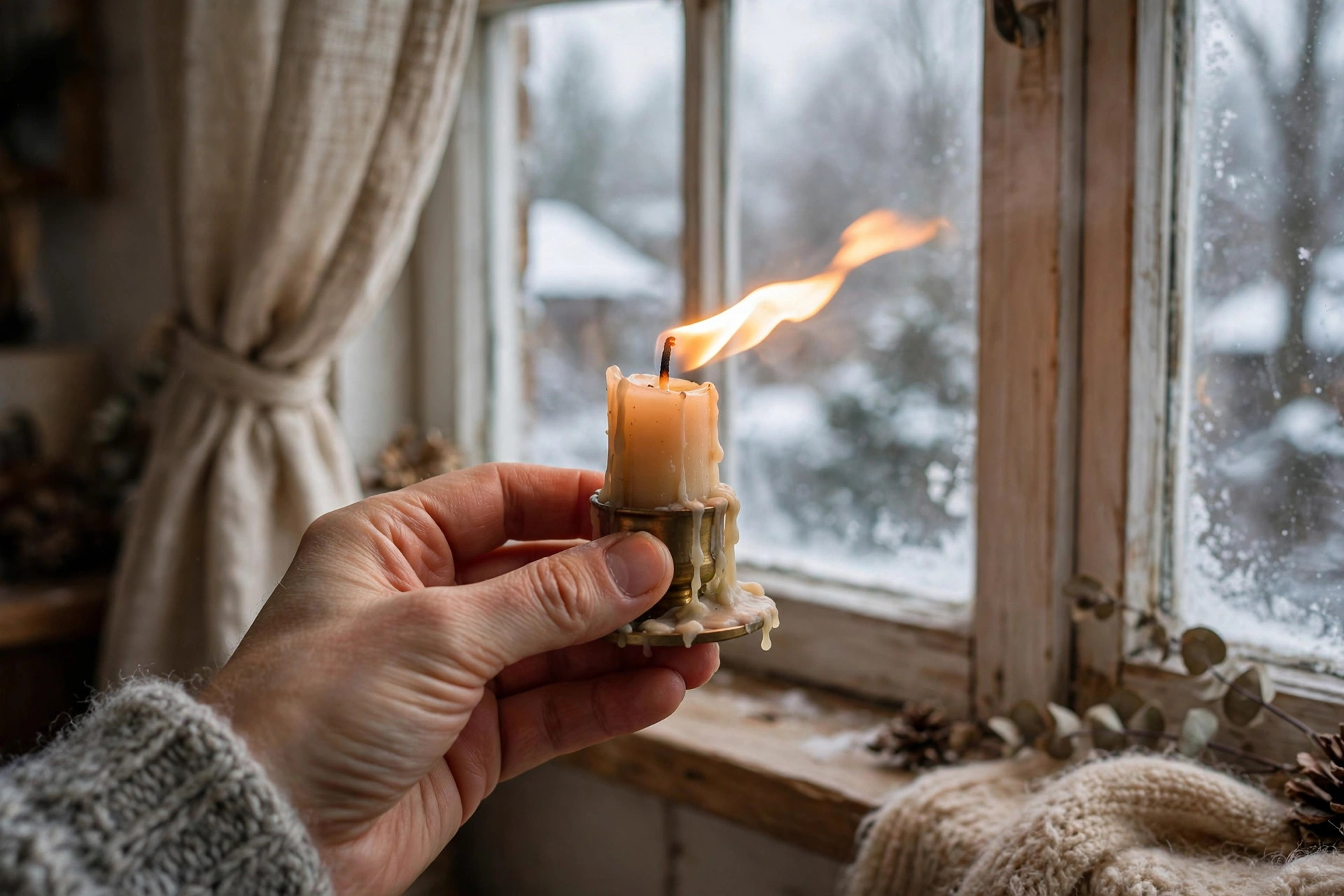
The incense test. Light a stick of incense (or a candle, held carefully) and move it slowly past window frames, door edges, baseboards, and outlets. Where the smoke wavers or the flame flickers, air is moving. Mark those spots with painter's tape so you can find them again when you come back with supplies.
Look for visual clues. In the attic, look for dirty insulation — dust streaks show where air has been moving through it. Outside, look for icicles and ice dams along the eaves; they often signal heat escaping through the roof and melting snow from below.
Borrow a thermal camera. Some libraries, tool-lending programs, and home-energy nonprofits lend handheld thermal cameras. Point one at your walls on a cold evening and the cold spots glow blue-purple against the warm walls. It's the fastest way to see exactly where your insulation is missing.
Prioritize before you fix
Make a short ranked list: biggest leak first. In most homes the ranking runs attic-related air leaks first, then major drafts at doors and windows, then basement rim joists, then ducts. Tackle what you can do yourself in a weekend — weatherstripping, caulking, attic hatch sealing — and get quotes for the bigger jobs like adding attic insulation or sealing ducts inside walls.
One more rule of thumb: fix air leaks before adding insulation. Insulation slows heat transfer, but air leaks carry heat straight through it. Sealing first makes every layer of insulation you add afterward work better.